
A dredging excavator diesel engine is a heavy-duty internal combustion engine designed to operate excavators used in dredging, river cleaning, and port maintenance. It provides high torque at low RPM to drive hydraulic pumps efficiently. These engines are typically turbocharged, water-cooled, and compliant with marine or off-road emission standards (e.g. IMO, EU Stage V, EPA Tier). Reliability, continuous operation capability, and resistance to humid and corrosive environments are key design requirements.
An excavator diesel-driven hydraulic system uses a diesel engine as the primary power source to drive hydraulic pumps. The engine converts fuel energy into mechanical power, which is transmitted to variable-displacement axial piston pumps. These pumps supply pressurized hydraulic oil to control valves, cylinders, and hydraulic motors. The system provides high force, precise control, and continuous operation for boom, arm, bucket, swing, and travel functions, ensuring efficient performance under heavy excavation and dredging loads.
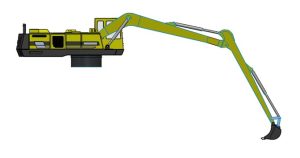
The excavator automation system is an integrated control and monitoring system that manages engine, hydraulic, and working functions. It includes electronic control units (ECU), sensors (pressure, position, temperature), and control software. The system optimizes engine speed, hydraulic flow, and fuel consumption, improves operational accuracy, and provides real-time diagnostics, safety interlocks, and fault monitoring for efficient and safe excavation and dredging operations.
The excavator boom is the primary structural member connecting the upper structure to the arm (stick). It transfers digging, lifting, and dredging loads to the machine body. The boom is typically fabricated from high-strength structural steel, reinforced at high-stress zones, and actuated by one or more hydraulic cylinders. Its design ensures high bending resistance, fatigue strength, and stability during heavy excavation and dredging operations.
The excavator arm, also called the stick, is the structural component mounted between the boom and the bucket or dredging tool. It controls reach and digging depth while transmitting excavation forces to the attachment. The arm is manufactured from high-strength steel with internal reinforcements and is operated by a hydraulic cylinder, designed to withstand high bending moments, torsion, and cyclic fatigue loads.
The excavator bucket is the ground-engaging attachment used for digging, dredging, and material handling. It is fabricated from wear-resistant high-strength steel and equipped with cutting edges and replaceable teeth. The bucket is actuated by a hydraulic cylinder through a linkage system, designed to withstand high impact forces, abrasion, and cyclic loading during excavation and dredging operations.
The excavator bed is the main load-bearing base frame of the machine, supporting the upper structure. It distributes operational loads, slewing moments, and vibrations or foundation. The bed is fabricated from high-strength welded steel and designed for high torsional rigidity, fatigue resistance, and long service life in heavy-duty excavation and dredging operations.
The excavator foundation is the base structure that supports and stabilizes the machine during operation. In dredging applications, it may consist of a pontoon, barge deck, or reinforced ground platform. The foundation transfers operational loads, moments, and vibrations from the excavator to the ground or floating structure, ensuring stability, load distribution, and safe operation under dynamic working conditions.
The excavator cabin is the enclosed operator compartment mounted on the upper structure. It houses the control systems and provides operator visibility, safety, and comfort. The cabin is typically constructed from reinforced steel with safety glass, vibration isolation mounts, and ergonomic controls, designed to meet ROPS/FOPS safety standards and reduce noise and fatigue during continuous operation.
Inside an excavator cabin, the following components are typically installed:
- Operator seat with suspension and safety belt
- Joysticks and control levers for boom, arm, bucket, and swing functions
- Pedals for travel and auxiliary hydraulic functions
- Instrument panel (engine RPM, fuel level, hydraulic pressure, alarms)
- Display monitor for machine diagnostics and operating parameters
- Air conditioning and ventilation system
- Noise and vibration insulation
- Emergency stop switch and safety controls
- Storage compartments and cup holder
These components ensure safe, efficient, and ergonomic machine operation.